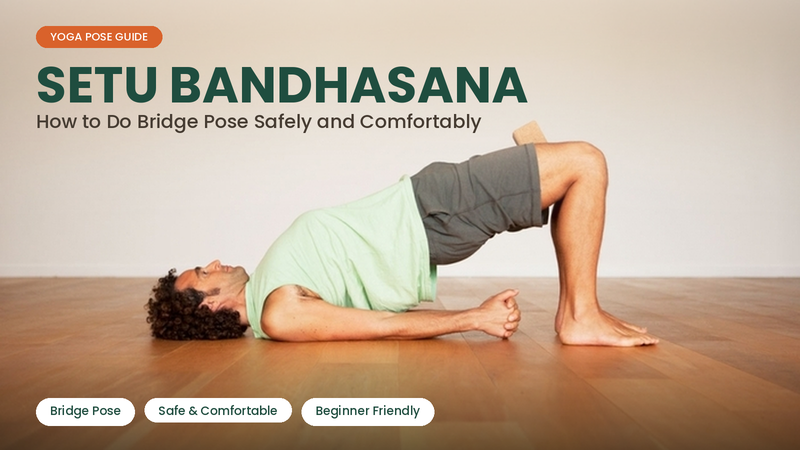

Setu Bandhasana or as it is more popularly known in English, Bridge Pose, is a basic yoga backbend with elements of strength, flexibility and a sense of relaxation. This name is composed of a combination of Sanskrit words setu (bridge), bandha, meaning lock or bind, and asana, which stands for pose. This pose lives up to its name, both as it helps build a bridge between the body and mind, as well as forming an actual physical arch shape akin to that of a bridge. A tranquil heart opening yoga pose – energizes the body; calms the mind and strengthens the spine.
Setu Bandhasana is appropriate for beginners through to advanced as it using props makes this asana easy to perform. This can be customized with props like blocks or blankets, making this suitable for every body type. This article teaches how to do Setu Bandhasana, benefits, contraindications and variations too.
What Is Setu Bandhasana (Bridge Pose)?
Setu Bandhasana comes from three Sanskrit words: setu (bridge), bandha (lock) and asana (pose). In English, we call it Bridge Pose. You lie on your back, plant your feet, and lift your hips so your body forms a gentle arch between your shoulders and your knees.
It’s a mild backbend, which makes it a friendly starting point before deeper poses like Wheel Pose (Urdhva Dhanurasana). It also asks your legs to work, so you get strengthening and opening in one shape.
I like it because it’s honest. Either your glutes are working, or your lower back is doing all the effort, and you’ll feel the difference within a few breaths.
How to Do Setu Bandhasana: Step by Step Instructions
Here are the Setu Bandhasana step by step instructions I give every new student. Move slowly and breathe through your nose.
- Lie down. Lie on your back with your arms alongside your body, palms down. Let your head and neck feel heavy.
- Bend your knees. Bring your heels close to your sitting bones, feet hip-width apart and parallel. You should just be able to brush your heels with your fingertips.
- Press and lift. Inhale, press through your feet and arms, and lift your hips. Lead with the tailbone, not the belly.
- Find the line. Keep your knees stacked over your ankles and your thighs roughly parallel. Roll your shoulders underneath you and, if it feels comfortable, interlace your fingers on the floor.
- Keep your neck neutral. Don’t turn your head. Let your gaze stay on the ceiling.
- Breathe. Hold for 5 to 8 breaths, keeping your glutes active and your ribs soft.
- Come down. Exhale and lower your spine slowly, one vertebra at a time, upper back first and tailbone last. Rest with your knees together for a few breaths.
A quick teaching note: in my classes, about half the students arrive with their feet too far forward and their knees falling in. Take a second to check your feet before you lift. It saves your knees.
Who it suits: Almost everyone who’s cleared to practise, especially desk workers, runners with tight hip flexors, and anyone new to backbends. The most common mistake? Lifting too high and crunching the lower back, which I’ll cover below.
Setu Bandhasana Benefits and Contraindications
Benefits you may notice
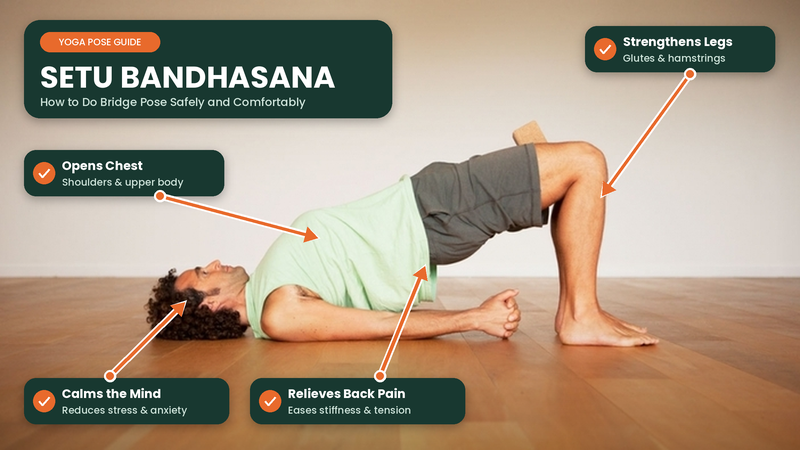
Many practitioners find Setu Bandhasana can support:
- Spinal mobility and a stretch through the chest, shoulders and front of the hips
- Strength in the glutes, hamstrings and back muscles that hold you upright
- Easier, fuller breathing, since the chest opens
- A calmer mind. Slow breathing in the pose gives many students a mindful pause in a busy day
- Better awareness of alignment, especially how your pelvis and ribs relate
Research on yoga and back health looks encouraging but is still mixed, so treat these as possibilities, not promises.
Who should skip or modify it
Talk to your doctor first, and likely skip or modify, if you have:
- A neck injury or cervical spine concerns
- A recent back, shoulder or knee injury or surgery
- Pregnancy, particularly later on, where a qualified prenatal teacher should guide you
- A medical condition for which you’ve been told to avoid inverted poses, such as uncontrolled high blood pressure or glaucoma
Safety note: This isn’t medical advice. If you have any injury, pregnancy or medical condition, please check with your doctor before you begin. And if something hurts (not stretches, hurts), come out of the pose.
Bridge Pose for Back Pain: What I’ve Seen in Class
Bridge Pose for back pain is the question I get asked most. Here’s what I’ve noticed over the years. Students with everyday stiffness from sitting often feel better when they learn to use their glutes and hamstrings, so the lower back stops carrying the whole load.
I used to push my hips as high as I could. My own lower back complained for weeks until a mentor told me, lower is fine, and longer is better. She was right.
So if your back is sensitive, try this: lift only a few inches, hold three or four breaths, and repeat three times. Keep your glutes engaged and your tailbone reaching toward your knees.
But “back pain” covers a lot of ground, from tight muscles to disc problems to sciatica. Sharp, shooting pain, numbness or tingling is a stop sign. Please see a doctor or physiotherapist before practising.
Common Setu Bandhasana Mistakes (and Easy Fixes)
I’ve corrected these thousands of times, and I’ve made every one myself.
- Knees splaying out. Hold a block or folded towel between your thighs, lightly.
- Feet too far away. If your heels are miles from your hips, your hamstrings will cramp. Bring them closer.
- Turning the head. This puts pressure on the neck. Keep your gaze up and your neck long.
- Cranking the hips up high. You’ll feel a pinch in the lower back. Lower down until you feel your glutes, not your spine, doing the work.
- Holding your breath. Check in. If you can’t speak a sentence in the pose, ease off.
Setu Bandhasana Variations for Beginners
Start with the first two. The others can wait until the basic shape feels steady.
- Supported Bridge: Slide a block under your sacrum (the flat bone at the base of your spine), at its lowest height, and rest for one to two minutes. This is my favourite when students are tired or stiff.
- Bridge with a block between the thighs: Gives your inner legs something to work with and keeps the knees honest.
- Dynamic Bridge: Inhale to lift, exhale to lower. Repeat six to eight times to warm up the spine.
- Hands interlaced: Opens the shoulders and chest, if your neck and shoulders feel comfortable.
- One-legged Bridge (Eka Pada Setu Bandhasana): Once you’re steady, lift one foot off the floor. Go slow; it’s much harder than it looks.
How to Fit Bridge Pose Into Your Week
Setu Bandhasana works well as a short daily habit. Three rounds of five breaths takes about three minutes, and I often suggest it first thing in the morning or right after a long stretch at your desk.
For counterposes, try Apanasana (Knees-to-Chest Pose) or a gentle supine twist (Supta Matsyendrasana) afterward. They let your spine settle and your lower back soften.
A few rounds of Cat-Cow (Marjaryasana-Bitilasana) beforehand can help warm up the spine. A quiet minute of Savasana afterward lets the breath slow down and your mindfulness come back to the body.
Be patient. Mobility doesn’t change overnight. Most of my students notice more ease after two to three weeks of steady practice, though everyone’s different.
Frequently Asked Questions About Setu Bandhasana
Is Setu Bandhasana good for beginners?
Yes. Setu Bandhasana is a backbending pose that the vast majority of beginners can absorb within two or three classes. Feet right near your hips, lift a couple inches — use the block under you sacrum if desired. Consult your doctor before hand if an injury, health condition prohibits you.
How long should I hold Bridge Pose?
Most beginners do well with five to eight slow breaths, repeated two or three times. As your strength improves, you can hold for up to a minute. Stay where your breathing remains smooth. If your lower back pinches or your neck feels strained, lower down and rest.
Can Bridge Pose help with back pain?
Many practitioners find Bridge Pose can support the muscles around the spine and ease everyday stiffness from sitting. It isn’t a treatment, though, and it doesn’t suit every kind of back pain. If your pain is sharp, ongoing or comes with numbness, see a doctor or physiotherapist first.
What are the contraindications of Setu Bandhasana?
Be cautious with neck injuries, recent back, shoulder or knee injuries, pregnancy, and conditions where inverted poses are discouraged. Talk to your doctor before practising. If you’re struggling, a qualified teacher can suggest softer options, like supported or shorter holds, so you can still move safely.
Can I do Setu Bandhasana every day?
Many people do, in short rounds, since it’s a mild pose. Listen to your body. If you feel soreness in your lower back or neck the next day, ease off, lower your hips, or take a rest day. Mixing in other poses keeps your practice balanced.
Here’s what I’d love you to do this week: roll out your mat, try Setu Bandhasana for three slow rounds, and notice how you feel afterwards. Not how it looks. How it feels. That’s the whole practice, really.
If you’d like me or one of our teachers to check your alignment live, join an online class at avataryogaschool. Beginners are always welcome, and so are stiff backs.
Conclusion
Setu Bandhasana is more than just a backbend — it is a full practice that encompasses body, mind and spirit. 2 or 4 blocks — A great Bridge Pose yoga pose, it strengthens the back and opens the chest, types on nervous system relaxation—an essential asana for practitioners at any level. No matter what your intentions are to release back pain, open up in your chest area or just want to get back in touch with your breath, this asana can give you numerous benefits.
So including Setu Bandhasana to your day-to-day pattern can adjust your vigour. It shows us that a simple lift of the hip, our teacher — release posture can lead to big shifts in awareness & energy. Practice with awareness, respect your body and always use props! Practicing this spine strengthener yoga asana regularly will help to develop strength, flexibility and inner calm. Think of Setu Bandhasana as your bridge — one that connects effort and ease, strength with surrender, body with soul.