
Balasana (Child’s Pose) is a very gentle, restorative and grounding asana in the yogic tradition. The name itself comes from the Sanskrit words “bala” (child) and “asana” (pose, or seat), and this simple folding into yourself is an invitation to a posture of submission — innocence and opening, a return to resting in purity. This is a building pose, that you will find in nearly every yoga style from Hatha Yoga to Vinyasa to Yin and even Restore.
Balasana not only has many benefits for the physical body, but it is also a stress relief yoga asana that stimulates introspection and emotional release. As the head rolls forward and rests on the mat, practitioners are stimulating the Ajna (third eye) chakra which aids in mental clarity and peace of mind This pose teaches you the meaning of surrender, emphasising that to rest is not a weakness but an integral aspect of strength and growth.
What is Balasana?
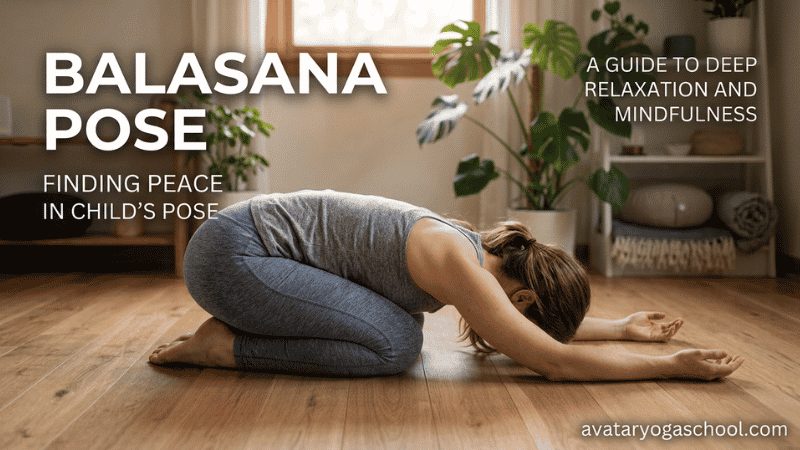
Balasana, also called Child’s Pose, is a gentle resting posture. You kneel, sit your hips back toward your heels, fold forward, and rest your forehead on the floor. Many practitioners find it helps ease tension in the back, hips and shoulders while calming the breath. It suits most beginners with a few simple adjustments.
How to Do Balasana: Step by Step Instructions
This is the one I teach in my classes. Take your time with each step, and let your breath set the pace.
Before You Begin
You don’t need much. A mat, a folded blanket, a block or firm pillow, and a few quiet minutes. If your hips are tight, keep a bolster nearby. I keep a blanket within reach for every class, and so should you.
The Steps
- Start on all fours. Place your hands under your shoulders and your knees under your hips. If the floor feels harsh, fold a blanket under your knees.
- Bring your big toes together and open your knees about as wide as your mat. This gives your belly room to soften.
- Exhale and send your hips back toward your heels. Don’t force them to arrive.
- Walk your hands forward and lengthen your spine. Rest your forehead on the mat, a block or your stacked fists.
- Let your arms be heavy. Reach them forward with palms down, or rest them alongside your legs with palms up.
- Breathe slowly into your back ribs for five to ten breaths. Stay longer if it feels good.
- To come out, walk your hands back in and press up slowly, rolling up one vertebra at a time.
Who Balasana Suits (and a Mistake I See Constantly)
The Balasana pose is a good fit for desk workers, new students, runners with tight hips, and anyone winding down before bed. If you’re stiff in the knees or thighs, you’ll just need a prop or two.
The mistake I see most often? Students shove their hips toward their heels while their shoulders hunch up around their ears. The pose turns into a fight. If your hips hover above your heels, that’s perfectly fine. Slip a rolled blanket between your calves and thighs and let gravity do the work.
Balasana Benefits and Contraindications
What Many Practitioners Notice
I’ll be careful with words here. Yoga isn’t medicine, and Child’s Pose won’t fix everything. But here’s what my students and I tend to notice:
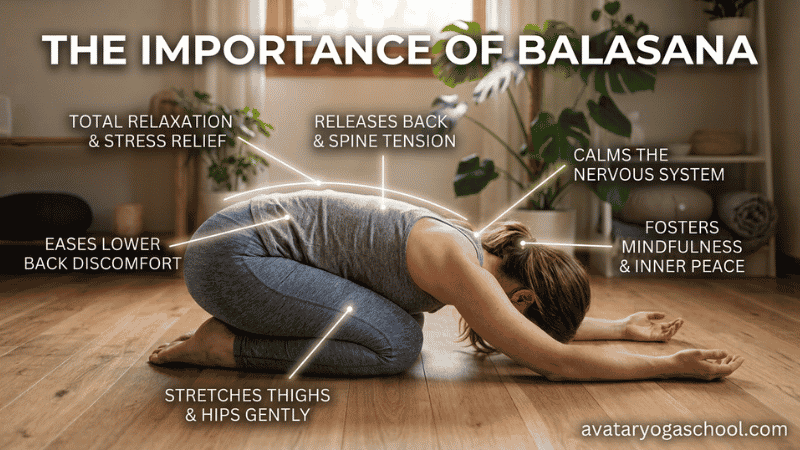
- A gentle stretch through the lower back, hips and thighs
- Slower, deeper breathing, especially into the back of the ribs
- A short pause for mindfulness, which can support stress relief
- Mild release in the shoulders when the arms are stretched forward
- A calm reset between more demanding poses, so you can check in with your alignment and mobility
Research on yoga in general suggests it can support flexibility and stress management. [Editor: add a reputable source here.]
Contraindications: When to Be Careful
Now, let’s be honest. No pose suits everyone, and Balasana asks a lot of the knees and ankles. Go gently, use props, or skip it if you have:
- Knee injuries or a knee replacement
- Ankle pain that makes sitting on your heels uncomfortable
- Recent hip, back or abdominal surgery
- Pregnancy, in which case keep your knees wide and support your torso with a bolster
- Any medical condition you’re unsure about
Safety note: please check with your doctor before starting yoga if you have an injury, are pregnant, or live with a medical condition. Pain is a signal to ease off. Mild stretching is fine, sharp or pinching sensations are not.
Child’s Pose for Back Pain: What Helps?
I’ll admit something. For years, I skipped Balasana in my own practice because it felt too easy. Then one winter I was teaching back to back classes, and my lower back complained all day. I started folding into Child’s Pose for two minutes between sessions. It wasn’t magic. But it gave my back somewhere to rest, and I moved more freely afterward.
That’s why many teachers suggest Child’s Pose for back pain that comes from general tightness or long hours of sitting. A few tips make a real difference:
- Widen your knees so your spine can lengthen instead of round
- Place a bolster or stacked pillows under your torso for support
- Hold for one to two minutes, not ten
- Breathe into your lower back and let the exhale run longer than the inhale
If your pain is sharp, shooting, or sticks around for days, please see a healthcare professional. Yoga is a helpful companion, not a replacement for proper care.
Balasana Variations for Beginners
Your body isn’t mine, and that’s the beauty of this pose. Try these options and keep whichever feels kindest.
Wide-Knee Child’s Pose
Open your knees wider than your mat and let your belly drop between your thighs. This is my first suggestion for anyone with a tight lower back, a fuller belly or chest, or pregnancy. Just keep your big toes touching so the hips stay heavy.
Supported Child’s Pose
Slide a bolster or firm pillow lengthwise under your chest, then turn your head to one side. Switch sides halfway through. It suits anyone who wants to stay longer, and it’s wonderful in the evening.
Child’s Pose with a Knee Pad
Roll a towel or blanket and tuck it behind your knees, between your calves and thighs. It eases pressure on sensitive knees and ankles. If it still hurts, choose a seated rest instead.
Side-Bending Child’s Pose
From your forward fold, walk both hands to the right and breathe into your left side body. Then switch. Many students love this after a long day at a desk, since it opens space along the ribs.
Common Balasana Mistakes, Hold Times and When to Practice
Common Mistakes and Quick Fixes
After years of watching students fold forward, I see the same few patterns again and again. The fixes are small.
- Holding the breath. A tight chest means a quiet breath. Count a slow exhale and your ribs will start to move.
- Shoulders creeping up. Walk your hands out a little further and let your elbows soften.
- Cranking the neck. Rest your forehead on a block or stacked fists so your neck stays long.
- Pushing through knee pain. Add padding, or pick a different resting pose.
- Rushing out. Come up slowly. Sudden movement can leave you lightheaded.
How Long to Hold It and When to Practice
Start with five breaths, about 30 seconds. Work up to one to three minutes as it becomes comfortable. There’s no medal for staying longer.
Here are the moments I rely on it:
- Morning, to ease stiffness before the day begins
- After backbends or twists, as a counterpose
- Mid-afternoon, when you’ve been sitting for hours and your shoulders have crept up again
- Before bed, with slow exhales
If you’re practicing at home, skip the clock. I tell students to close their eyes and count breaths instead. It keeps the mind from wandering off to the to-do list, which is half the point of a resting pose like this one.
One breathing cue I use in class: inhale for four counts, exhale for six. That longer exhale tends to help the body settle. Keep it gentle and never strain.
Frequently Asked Questions About Balasana Pose
What is Balasana in yoga?
Balasana, or Child’s Pose, is a restful kneeling posture where you sit back toward your heels and fold forward with your forehead down. Teachers often use it as a break during class. It’s gentle enough for most beginners, and you can adjust it with props, wider knees or a different arm position.
Is Child’s Pose good for back pain?
Many people find Child’s Pose a comfortable way to ease general lower back tightness, especially after sitting for long hours. Widening the knees and supporting your torso with a bolster often helps. It isn’t a treatment, though, so see a doctor if your pain is sharp, ongoing or comes with numbness.
How long should you hold Balasana?
Start with five slow breaths, around 30 seconds, and build up to one to three minutes. Longer holds are fine if you feel relaxed and your knees are happy. Come out slowly if you feel pinching, dizziness or discomfort in the knees or ankles.
Who should avoid Balasana?
Take extra care or skip it if you have knee or ankle injuries, a knee replacement, or recent surgery. In pregnancy, keep your knees wide and use a bolster. If you have a medical condition, check with your doctor and a qualified teacher before you practice.
Can beginners do Balasana every day?
Yes, most beginners can do it daily as a short rest, if it feels comfortable. Keep holds modest and use props if needed. If you notice knee discomfort or sharp sensations, stop and ask a qualified teacher to check your alignment.
Your Turn: Try Balasana Tonight
Balasana asks very little of you. A few slow breaths, a soft forehead on the floor, nothing to prove. That’s the Balasana pose at its best: simple, kind, and always there when you need it.
Want me to guide you through it live? Book a free trial class with Avatar Yoga School. We teach online for students across India, the US and the UK, and I’ll help you find the version of Child’s Pose that fits your body.