Follow us
Call / WhatsApp+91 783-096-1407 Join a courseEnroll now Enroll now
  1. Home
  2. Yoga TTC Rishikesh
  3. FAQs
Frequently asked questions

Frequently Asked Questions about Yoga Teacher Training in Rishikesh

Find clear answers to the questions students ask before they join Avatar Yoga School: courses, certificates, fees, food, rooms, safety, visas and travel to Rishikesh. If you cannot find your answer here, the team replies on WhatsApp.
  • 36 answers
  • Reply on WhatsApp
  • Checked facts
★★★★★4.8 on Google4.9 on Tripadvisor
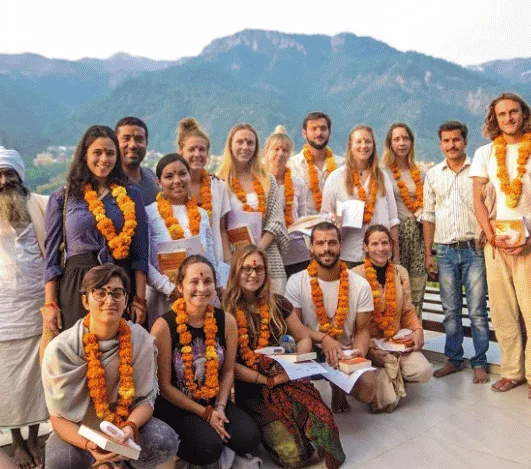
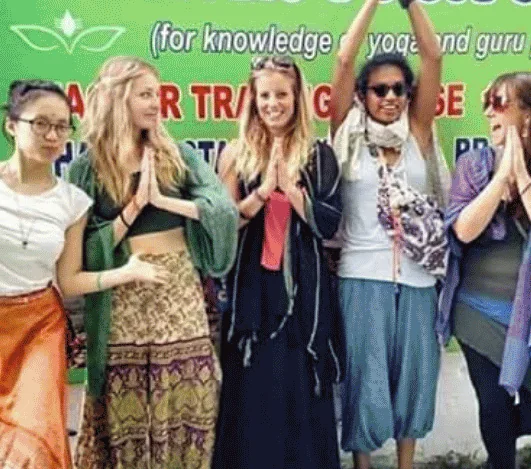
Students smiling at Avatar Yoga School in Rishikesh
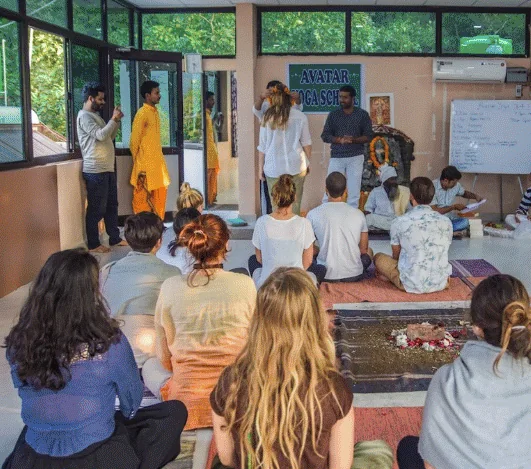
Yoga hall class at Avatar Yoga School
Students and teachers at Avatar Yoga School
SwargashramRishikesh, India
Topics7 groups of questions
Courses50 to 500 hours
LanguageEnglish
ReplyWhatsApp and phone
LocationSwargashram, Rishikesh
All questions

What do students ask before joining a yoga teacher training in Rishikesh?

Questions are grouped by topic. Choose a group below, or read them all. Each answer is short and direct, and the team is happy to explain more.

Before you join

Yes. The 100 hour course welcomes beginners, and the 200 hour course starts from the basics for students with a few months of practice. You do not need advanced poses. Tell the team about any injury or health condition when you enquire.

Most studios and gyms ask for a 200 hour certificate as the minimum starting point. After that, a 300 hour course takes you to 500 hours in total, which is the advanced level on Yoga Alliance. Hours alone do not make a good teacher, so look for plenty of practice teaching.

Choose a retreat or the 100 hour course if you are new to yoga, the 200 hour course if you want to teach, and the 300 or 500 hour course if you already teach. If you are unsure, message the team with your experience and dates.

No. Flexibility is not a requirement, and many students are stiff when they arrive. Teachers offer easier versions of each pose and focus on alignment, breathing and steady practice rather than on how far you can bend.

Often yes, with care. Tell the team about the condition when you enquire, and speak to your doctor first if it is serious. Teachers can adapt the practice, but some conditions mean that a different course or a later date is a better choice.

Practise a little yoga and slow breathing most days, sort out your visa and travel insurance early and book your flight to arrive a day before the course. Pack simple, comfortable clothes and any medicines you need.

Courses and certificates

The 100 hour course runs for about two weeks, with classes six days a week and Sunday free. It covers the foundations of asana, pranayama, meditation, anatomy and teaching, and it suits beginners and busy people.

The 200 hour course runs for about three weeks, from the 2nd to the 22nd of every month, with classes six days a week. Many students arrive a day early to rest. Message the team to confirm the next start date.

The 200 hour course is the foundation and the usual first teaching qualification. The 300 hour course is for teachers who already hold a 200 hour certificate and want advanced practice and deeper study. Together they make 500 hours.

The 500 hour course combines the 200 hour foundation and the 300 hour advanced course in one stay of about eight weeks. It suits students who prefer one long program to two separate trips, and it follows the Yoga Alliance route to RYT 500.

A certificate from a Yoga Alliance registered school is accepted by most studios and wellness centres around the world, and you can apply for the RYT designation. Rules differ by country, so check what the studio where you want to teach requires.

RYS stands for Registered Yoga School. It is a status Yoga Alliance gives to schools whose 200 hour programs meet its standards. After finishing a course at an RYS 200 school, you can apply to register as an RYT 200, a Registered Yoga Teacher.

Fees and booking

The fee usually covers tuition, accommodation, daily vegetarian meals, course manuals and your certificate. Flights, visa, travel insurance and personal expenses are normally extra. Ask the team for the exact list for your course and room type.

Send an enquiry through the website, WhatsApp or phone, choose your batch and pay the booking advance to hold your seat. The team replies with dates, fees and inclusions first, so you can decide without pressure.

Often yes, depending on availability. Tell the team as early as you can, and they will explain what applies to your booking. The payment page also explains the booking advance and refund terms.

Refunds depend on how early you cancel. The sooner you tell the team, the more likely it is that part of your payment can be returned or moved to another batch. The full terms are shared before you pay, so read them first.

Offers may run for some batches, and the website shows what is available at the moment. If you saw a promotion after booking, write to the team with the details and they will look at what can be done.

Food and rooms

Meals are vegetarian and freshly cooked. Vegan food is usually easy to arrange, and gluten-free meals are possible with notice. Tell the team about allergies and dietary needs when you book, so that the kitchen can plan ahead.

Drink only filtered or purified water, which is what the school provides for drinking. Avoid tap water everywhere in India. Bring a refillable bottle so that you can top it up from the purified supply.

Choose a shared room for a lower price and some company, and a private room if you need quiet and space to rest. Both are clean and simple. The food and accommodation page compares the two in detail.

Wi-Fi usually works for messages and short calls in your free time, although speeds in the hills can be uneven. Phones are kept silent during classes, and most students find that being offline for most of the day helps them focus.

Yes. You can enrol together. Ask for a shared room when you book, or take two private rooms if you prefer your own space. Tell the team who you are travelling with so that they can arrange the rooms.

Daily life

Days begin around 6 am with pranayama and a morning class. After breakfast there are lectures on philosophy and anatomy, afternoons bring practice teaching and workshops, and the day ends with meditation. Classes run six days a week and Sunday is free.

Occasionally, if you are unwell or very tired, tell your teacher and take the rest. Attendance counts towards your certificate, so plan to be present for almost everything, and ask how to make up any class that you miss.

You can keep your phone, but it should be silent and put away during classes. Wi-Fi works in your free time. Let family know that you will be offline for much of the day.

Classes are taught in English, in plain language, and teachers speak slowly and repeat key points. Students come from many countries, and many are not native English speakers. Mention any concern when you enquire.

There are breaks between sessions each day, and Sunday is generally free. Students use the time for a walk by the Ganga, a cafe, reading or a short trip. Save longer sightseeing for Sunday so that you do not start Monday tired.

Health and safety

Rishikesh is widely considered a safe and welcoming town, and many students arrive alone. Use ordinary travel sense: lock valuables, avoid empty roads late at night and use registered taxis. Share your arrival details with the team so that someone expects you.

Tell a teacher or the school team straight away. You can rest, and they will help you reach a doctor or clinic. Rishikesh has hospitals, including AIIMS Rishikesh, and many pharmacies. Travel insurance that covers medical costs is strongly recommended.

Many common medicines are sold in Indian pharmacies, sometimes under other brand names, but you should not count on finding yours. Bring enough for the whole stay in the original packaging, with a copy of your prescription.

Speak to your doctor or a travel clinic six to eight weeks before you fly, because advice depends on your home country and health. Routine vaccines should be up to date, and hepatitis A and typhoid are commonly recommended.

Travel and visa

Fly into Jolly Grant Airport in Dehradun, about 35 km away, or into Delhi, roughly 240 km by road. Haridwar railway station is about 25 km from Rishikesh. Send your flight details to the team so that pickup can be planned.

February to April and September to November are the most comfortable months. July and August bring heavy monsoon rain, May and June get very hot, and December and January are cold in the early morning, so bring layers.

Most foreign nationals need a visa. India's tourist and e-Tourist visas allow attending a short term yoga programme, but a 30 day e-Tourist visa may not cover longer courses. Check the official Indian visa portal or your embassy and apply early.

Bring loose, comfortable yoga clothes, a few modest outfits, a light shawl, a refillable bottle, sunscreen and mosquito repellent. Add warm layers between December and February. Rishikesh is a spiritual town, so cover your shoulders and knees when you go out.

Pickup can usually be arranged on request. Send your flight or train details to the team in advance, and ask for the cost and the driver's contact details so that the arrival is smooth.

Still have a question?

Talk to our team directly. We reply on WhatsApp and phone.

WhatsApp us Call +91 78309 61407
Join the next batch

Did not find your answer? Talk to the team

Tell us your preferred month and your experience. The team will reply with batch dates, the fee and what is included.

Check batch datesWhatsApp us
Our courses

Which course page answers your question in more detail?

Each course has its own page with the syllabus, daily schedule, fees and more answers. Choose the one you are considering and read it in full.
Enquire nowWhatsApp